
CSM, ITSM, or both: What's your recipe for success?
 New article articles in ServiceNow Community
·
Nov 12, 2024
·
article
New article articles in ServiceNow Community
·
Nov 12, 2024
·
article
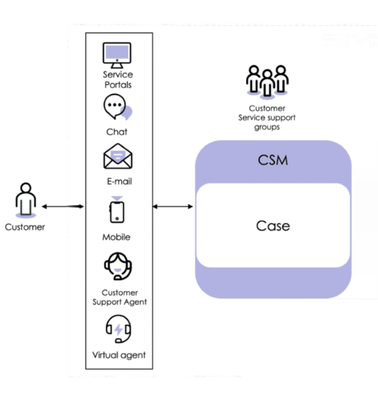
Understanding the focus and purpose of CSM and ITSM
Customer Service Management (CSM) is centered around external customers, spanning both business-to-business (B2B) and business-to-consumer (B2C). For instance, consider Sarah, a customer service agent at a software company that provides cloud-based solutions. Sarah’s primary goal with CSM is to ensure customer satisfaction by resolving technical issues, managing subscription inquiries, and guiding customers through product updates, ultimately helping retain clients and enhance the customer experience.
CSM offers various applications that facilitate these interactions, including Case Management for tracking and managing customer cases, Omnichannel support for seamless communication across platforms, and Data Management for organizing customer information. Service Model Foundation and Agent Experience enhance consistency and efficiency by creating a structured service model and providing agents with the right tools and insights to perform their tasks effectively. Each of these applications can be tailored to meet your specific business needs, from managing customer inquiries to providing agents with a structured framework and valuable insights. See Customer Service Management, for more information.
IT Service Management (ITSM) focuses on supporting internal users of IT services within an organization and empowering teams that rely on these services to deliver value to external customers. Meet Alex, an IT administrator dedicated to maintaining network infrastructure. Alex's role in ITSM entails implementing and managing IT services aligned with the organization's business needs, aiming to support and enable business outcomes through efficient IT operations. See IT Service Management, for more information.
Identifying the key stakeholders
With CSM, key stakeholders include business professionals such as customer service agents, managers, and executives. Their efforts aim to ensure seamless customer experiences and foster long-term relationships.

ITSM engages IT professionals ranging from leadership and management to system administrators, technical experts, developers, and support teams orchestrating IT services to meet organizational objectives and drive operational excellence.

Integration possibilities for CSM and ITSM
CSM and ITSM do not need to operate independently; they can be integrated to streamline service delivery across the organization. For example, imagine a scenario where Sarah, working at the software company, encounters a technical issue while assisting a client. By integrating CSM with ITSM, Sarah can seamlessly raise an incident ticket within the same workflow, which triggers an ITSM process managed by Alex. This integration allows Sarah and Alex to collaborate efficiently, reducing resolution time and enhancing the overall customer experience.
Benefits of integrating CSM and ITSM
The key benefits include:
- Efficient Collaboration: Agents can seamlessly create incident, problem, change, and request records directly from open cases, facilitating collaboration across different parts of the organization to resolve customer issues promptly.
- Enhanced Customer Communication: Updates to records associated with a case automatically reflect in case work notes, enabling agents to provide timely updates to customers and fostering transparency and trust in customer interactions.
- Unified Service Experience: Customers can submit requests directly from the customer service portal, where a case is created for each request. A unified experience ensuring consistency and ease of access for customers seeking assistance.
- Insightful Dashboards: Agents and managers can gain comprehensive insights by viewing cases with Service Management-related indicators on the Customer Service dashboards. This broad-based view enables informed decision-making and proactive management of customer interactions.

Which one is right for your business?
To deliver efficient service and enhance customer satisfaction, it’s important to understand the distinct roles of CSM and ITSM. Each module addresses specific needs—CSM focuses on managing customer relationships, while ITSM is centered around optimizing IT service delivery. Knowing when to use each one, and how to integrate them effectively can help organizations streamline operations, improve customer experiences, and achieve better business outcomes.
So, whether you're Sarah, managing customer interactions at the software company, or Alex, focusing on IT processes, leveraging the strengths of both CSM and ITSM is key to driving success in today's evolving business environment.
https://www.servicenow.com/community/csm-articles/csm-itsm-or-both-what-s-your-recipe-for-success/ta-p/3101936