
Part 4: Process Separation (Delegated Administration)
Likewise, processes can be domain-separated. Process separation is enabled through the use of the sys_overrides column in domain-aware tables. Any table that contains both the sys_domain and the sys_overrides fields can be configured to have different processes from the parent domain.
For example, you could have a business rule that exists in the Top domain, and then override it for a child domain to run a different business rule. As another example, two users who sign into different domains might see two different user interfaces in the instance.
If you activate only data separation and not process separation, all domains will use the same business rules. In addition, you can choose to not separate data, just processes.
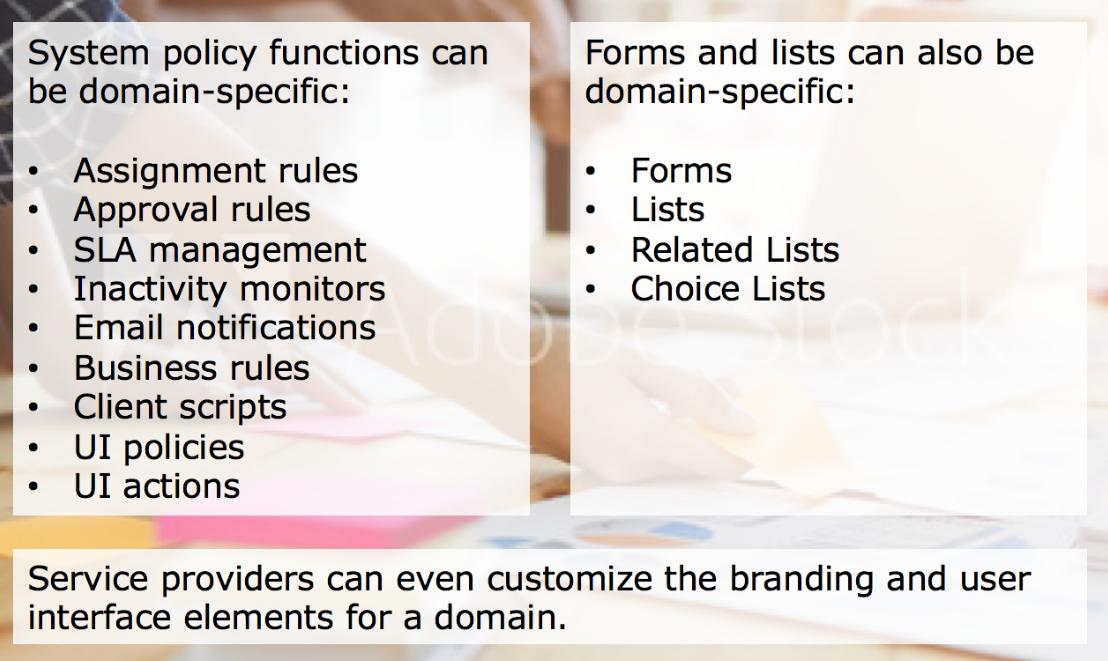
Here are the objects that can be process separated within ServiceNow
Process Separation
System policy functions such as assignment rules, approval rules, SLA management, inactivity monitors, email notifications, business rules, client scripts, UI policies, or UI actions, can be defined globally or specifically for a particular domain.
Forms, lists, Related Lists, and Choice Lists can also be domain-specific. For example, if a particular domain requires different fields on its Incident form, no problem! If a customer wants a different set of choices in a Choice List, they can customize the Choice List for their domain.
Service providers can even customize the branding and user interface elements for a domain.
Here is how the process separation rules flow within the instance.
Process Separation
https://medium.com/@LearnITbyPrashant/part-4-process-separation-delegated-administration-f27769a2d1c2?source=rss-d005fc598f0a------2