
Shape Your ServiceNow Platform for Quality and Success
 ServiceNow – I'm Ahmed
·
Apr 26, 2025
·
article
ServiceNow – I'm Ahmed
·
Apr 26, 2025
·
article
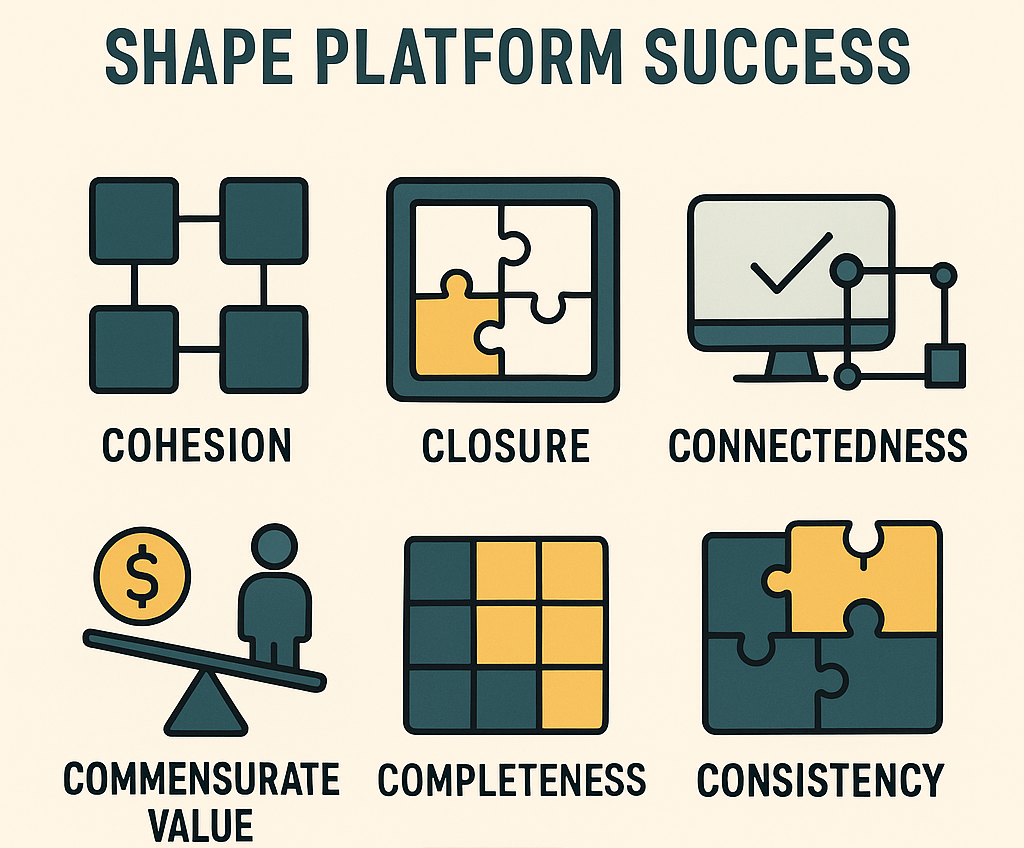
I’m a big fan of Gregor Hohpe’s work. I recently read his book Platform Strategy, which explores a strategic and systems-thinking approach to building and scaling digital platforms.
One of the chapters I particularly enjoyed focuses on assessing platform quality and how effectively you’re utilising the platform’s capabilities. In this post, I’m applying some of the criteria Gregor outlines to evaluate how you’re using ServiceNow as a platform.

Cohesion
Cohesion refers to how well your platform modules work together under a unified architecture and user interface. It’s also about how effectively you’re leveraging that unified structure to your advantage.
In ServiceNow, core applications like ITSM, ITOM, HRSD, and CSM are built to function together using the same architecture and shared data models.
 High Cohesion Example: Using Incident, Problem, and Change Management together in a way that utilises the shared data models, workflows, and user experience. Also, integrating ITSM with products like CSM or Virtual Agent to further enhance cohesion — everything feels part of a single, seamless system for the end user.
 Low Cohesion Example: Creating custom applications to duplicate functionality that already exists out-of-the-box (OOTB) without using common components or shared architecture. This results in disconnected user experiences, making the platform feel like a collection of unrelated applications.
Closure
Does your ServiceNow platform offer a complete and usable experience within its modules, or are some key pieces missing?
Good Closure Example: Using ServiceNow CSM effectively, not just as ticketing but also knowledge management, SLAs, and reporting, so you don’t need another tool or platform to deliver the core component.
Poor Closure Example: Your ServiceNow implementation cannot function independently and requires external tools for core CSM processes, creating gaps in the user experience.
Connectedness
How well is your ServiceNow platform integrated with external tools?
High Connectedness Example: ServiceNow is integrating well with external systems using standard methods such as REST APIs, MID Server, IntegrationHub, OOTB connectors, and you’re keen to integrate with other tools to provide full value to your organisation
Low Connectedness Example: Your ServiceNow platform operates as a standalone platform, offering little integration with other tools
Commensurate Value
Do users benefit proportionally from what they use?
Value from Partial Use: A company using only Incident Management can still automate workflows and realise a clear ROI.
Better Value: Even greater value comes when multiple modules work together, such as ITSM + ITOM + CSM, maximising automation, user satisfaction, and business outcomes.
Completeness
How many products are you using to cover business needs?
High Completeness Example: Using SOM, CSM and ITSM to cover E2E pre-sale and post-sale process.
Enhanced Completeness: Extending the platform with Store Apps or building custom applications using App Engine to meet a specific organisational need that is not supported OOTB while remaining within ServiceNow’s ecosystem.
Consistency
Uniformity across modules, user interfaces, APIs, data models, and error handling.
Good Consistency Example: Applying the CSDM across ServiceNow products for data modelling, and using Workspaces as the standard interface for agents, provides a unified user experience. By delivering a similar logic and design across products, it reduces the training burden and boosts usability.
This framework provides a valuable lens for assessing how well your platform strategy is delivering value. By continuously improving cohesion, closure, connectedness, commensurate value, completeness, and consistency, you can ensure that ServiceNow remains a true enabler of innovation within your organisation
https://ahmeddrar.wordpress.com/2025/04/26/shape-your-servicenow-platform-for-quality-and-succes/